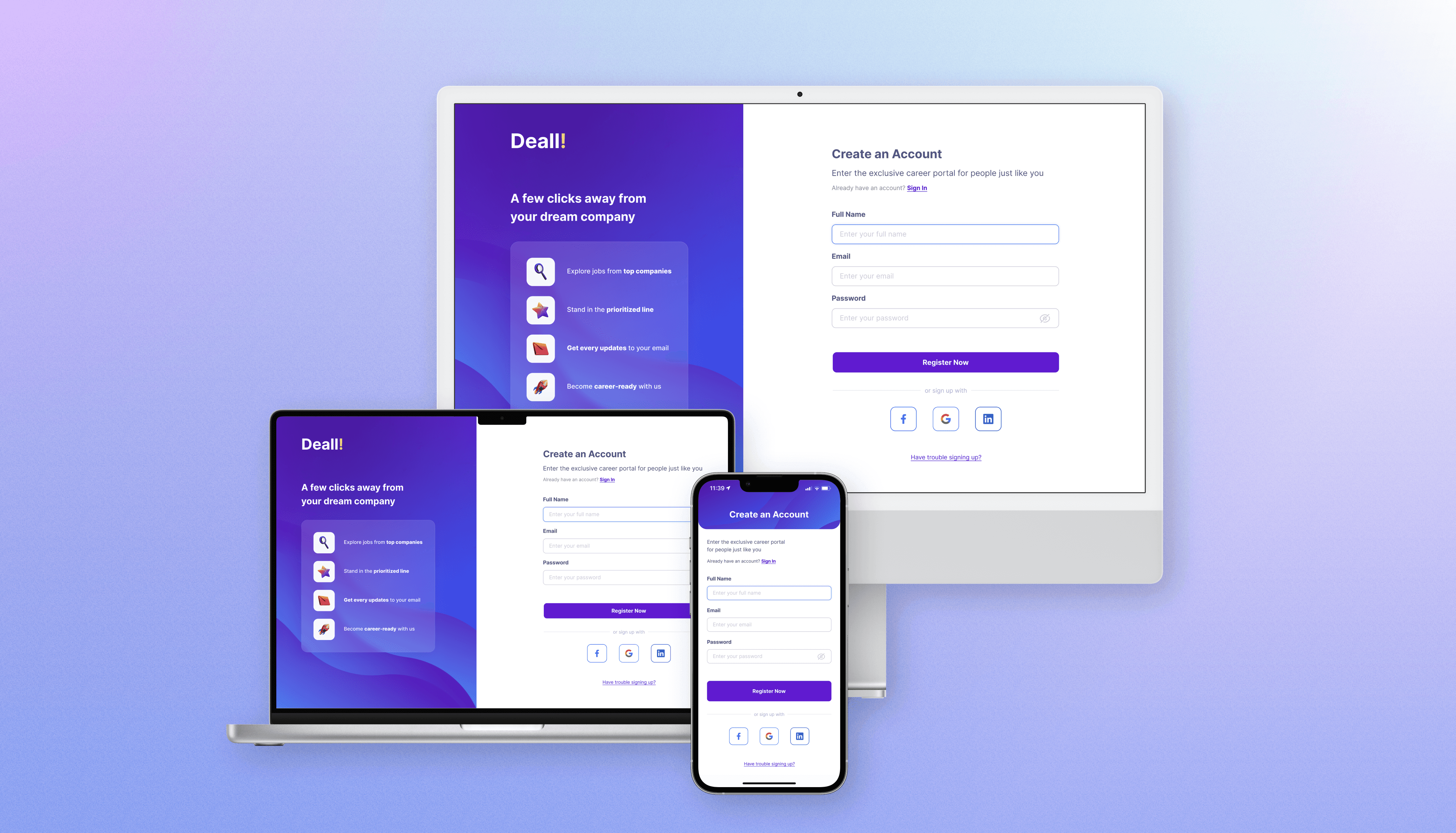
Redesigning Deall’s Sign-Up Experience to Reduce Drop-Offs
Work Project
Deall is a career portal connecting top talents with job opportunities. While exploring the platform, I noticed usability issues on its sign-up page that likely contributed to high churn.
[My Role]
UI/UX Designer
[Timeline]
May 2023
Context:
Launched in March 2022, the page felt dense and difficult to navigate, especially on smaller screens. This led me to dig deeper using the 5W1H method to uncover the root causes and spot areas for redesign.
What
High Churn Rate on Deall’s Sign-Up Page
When
March 2022
Where
Deall's Sign Up Page
Why
(will be analyzed below)
Who
Deall’s user who want to register an account
How
(will be analyzed below)
Then i identified:
[1] Poor Visual Hierarchy
Key actions buried below the fold. The sign-up form wasn't instantly visible on mobile or small desktop viewports.
[2] Low Engagement
Generic layout with too much text. The benefits section was overly wordy and missed impact.
[3] High Cognitive Load
the sign-up form bombards users with everything at once, which can lead to drop-off or abandonment.
[4] Friction Points
No social login, poor mobile visibility.

Sign-Up interface on half size-desktop
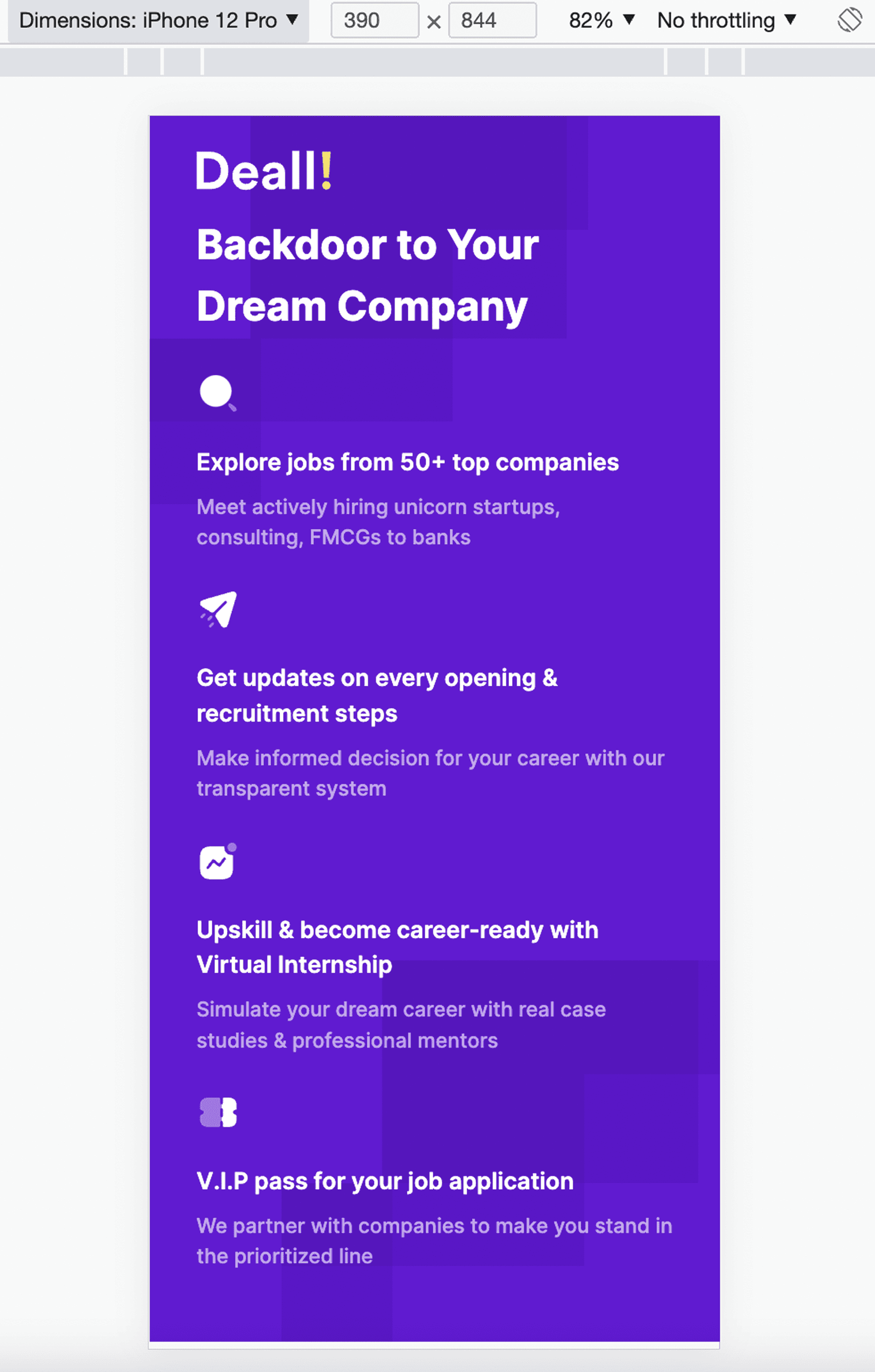
Sign-Up interface on mobile device
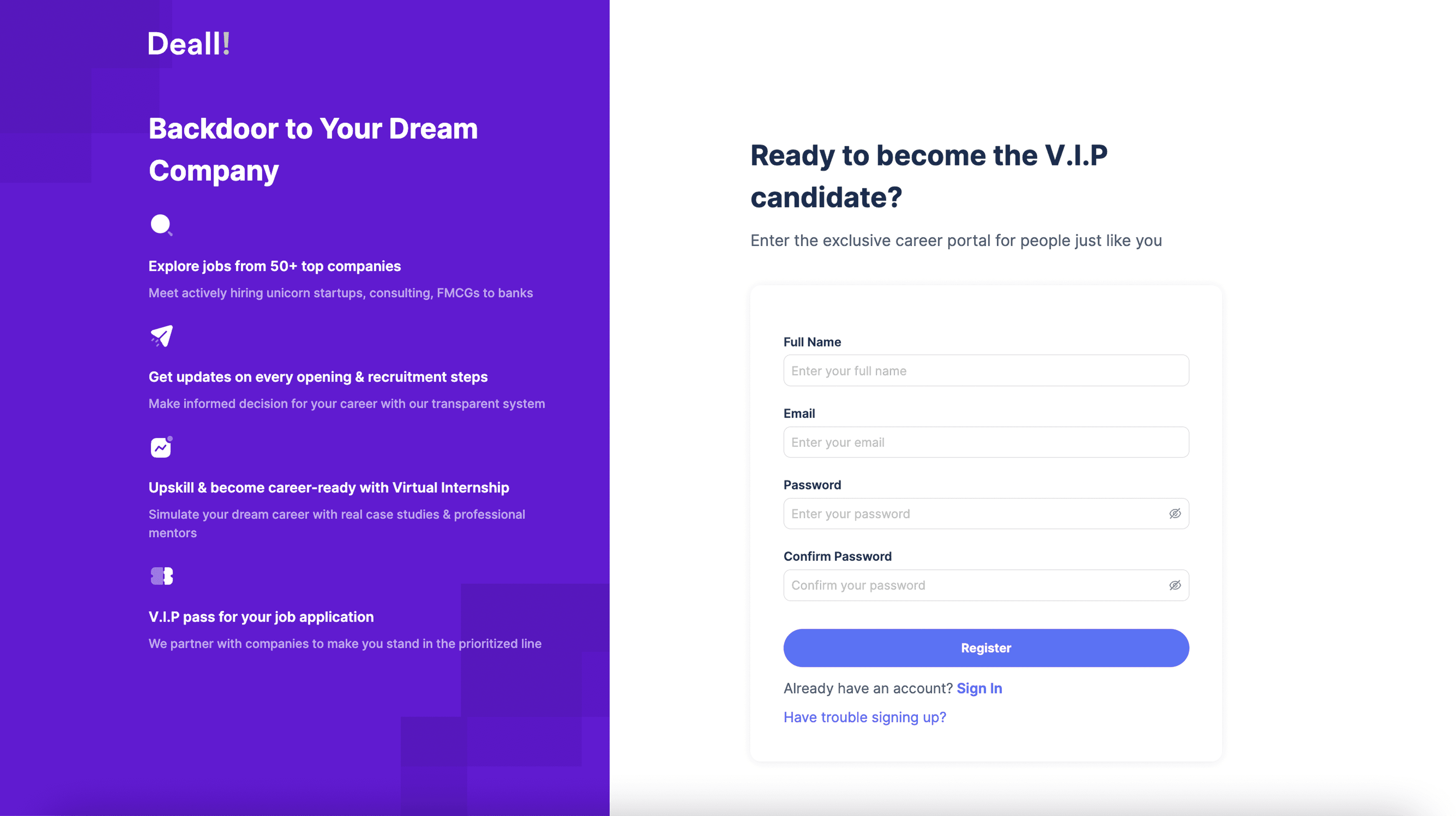
Sign-Up interface on desktop. No social media sign-up button. There wasn't any consistency on the CTA button to the brand color as well.
These insights shaped the next step: reframing the problem into design goals. I translated my findings into actionable questions with HMW (How Might We):
How might we make the sign-up feel easier and faster?
How might we design a clearer visual structure?
How might we better communicate benefits without overwhelming users?
Then i made:
WEBSITE VERSION
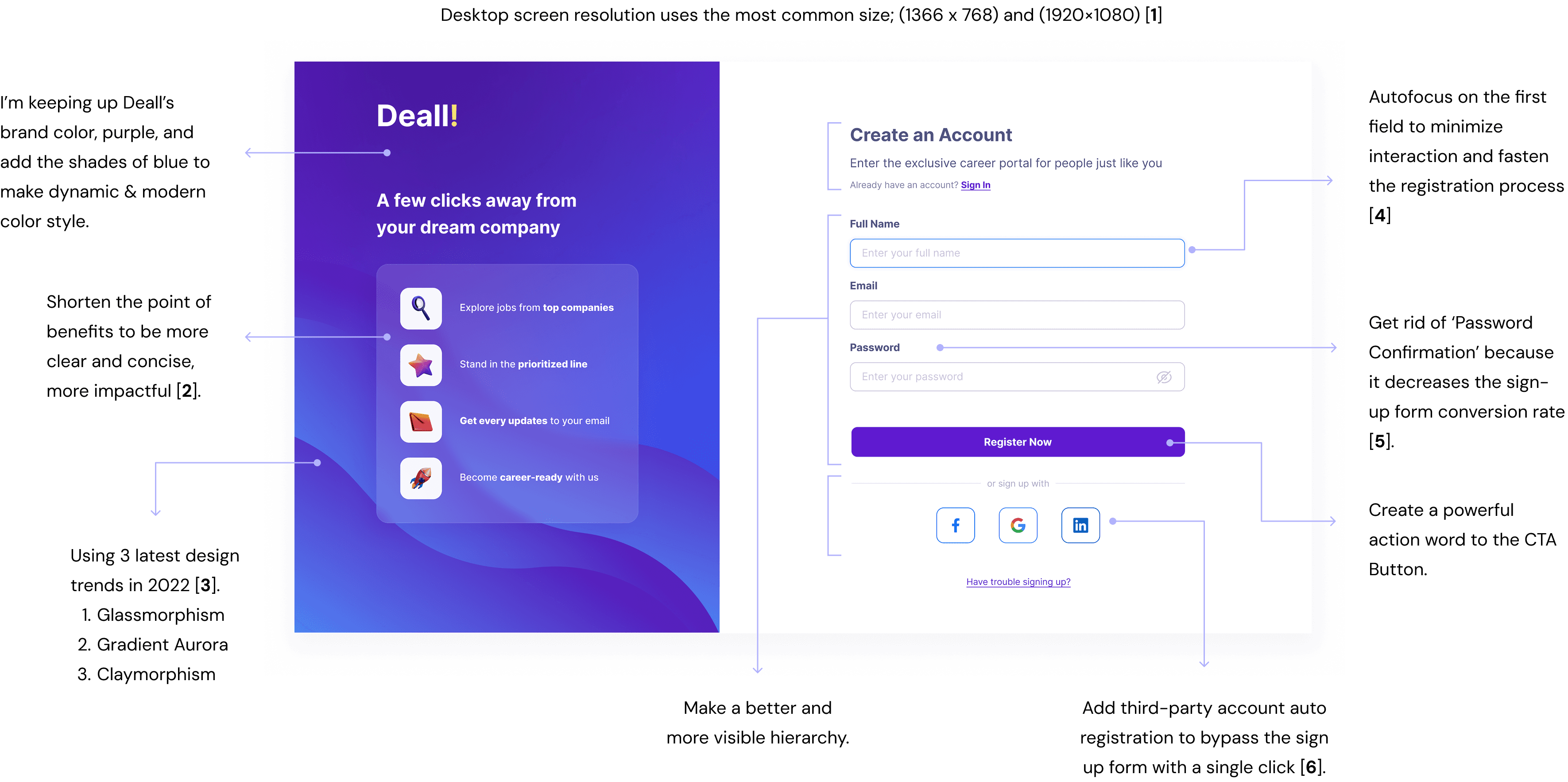
DETAILS
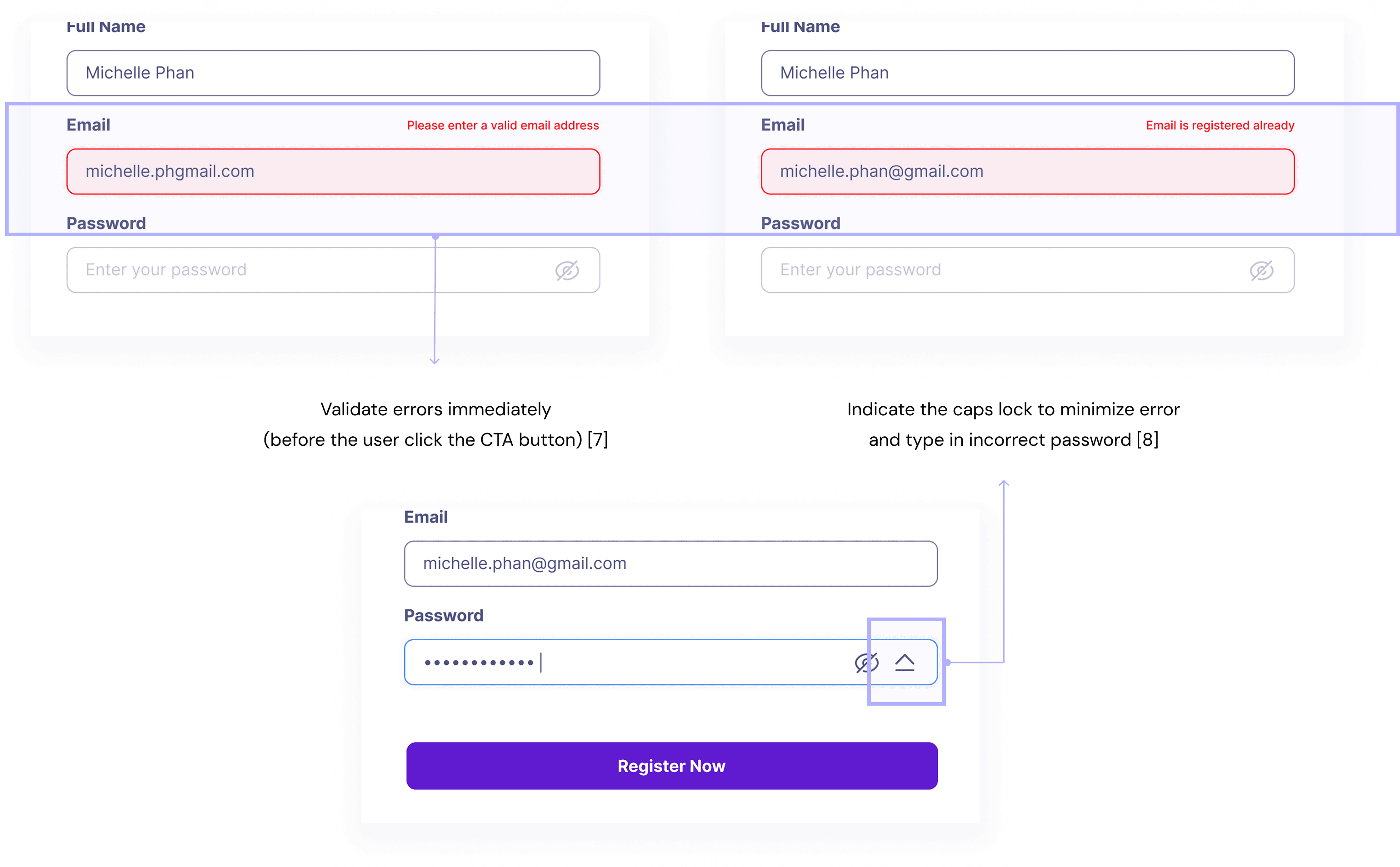
WEB MOBILE VERSION
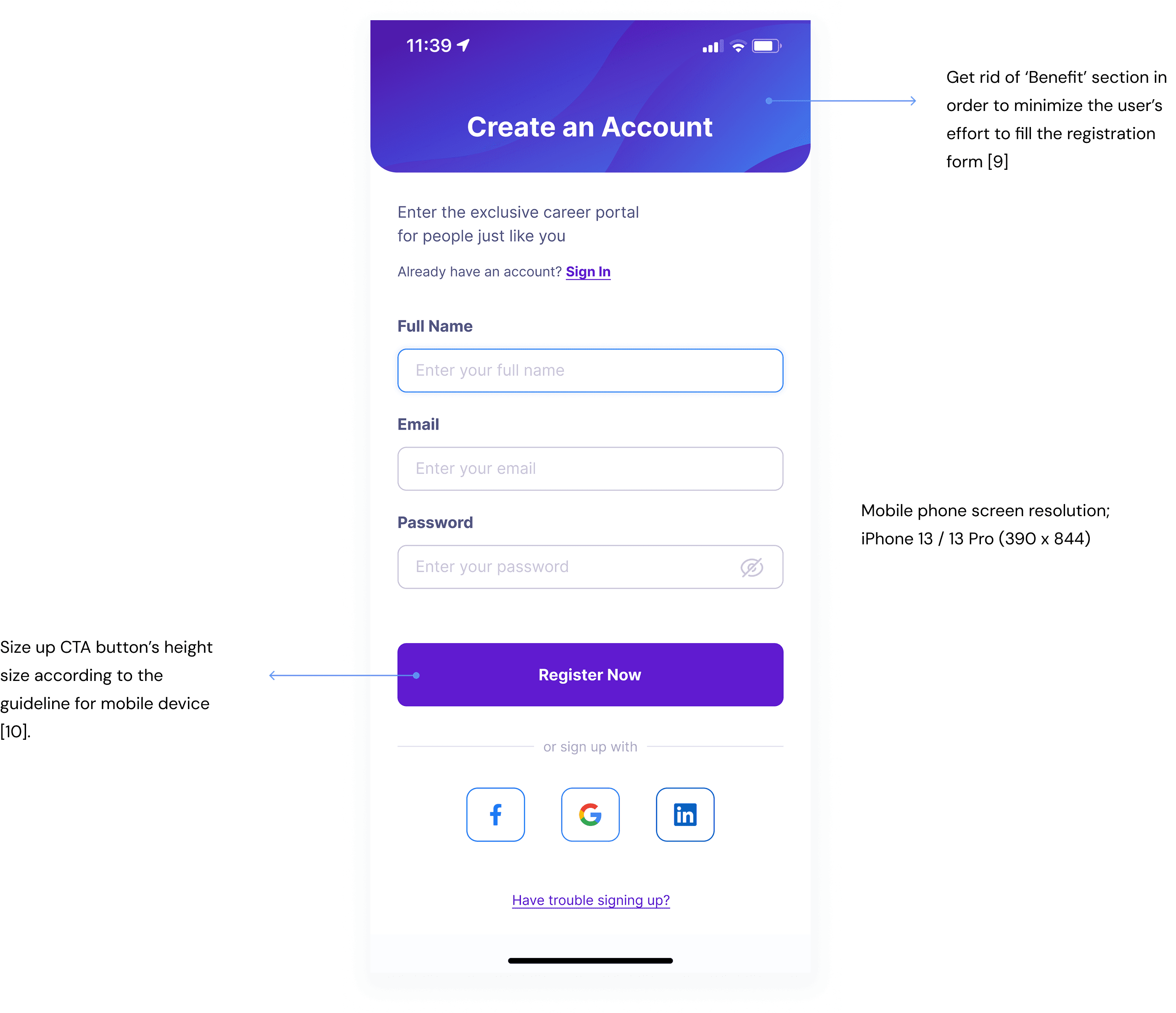
BEFORE
❌ Poor Visual Hierarchy
🧠 High Cognitive Load
😐 Low Engagement
🚫 Friction Points
AFTER
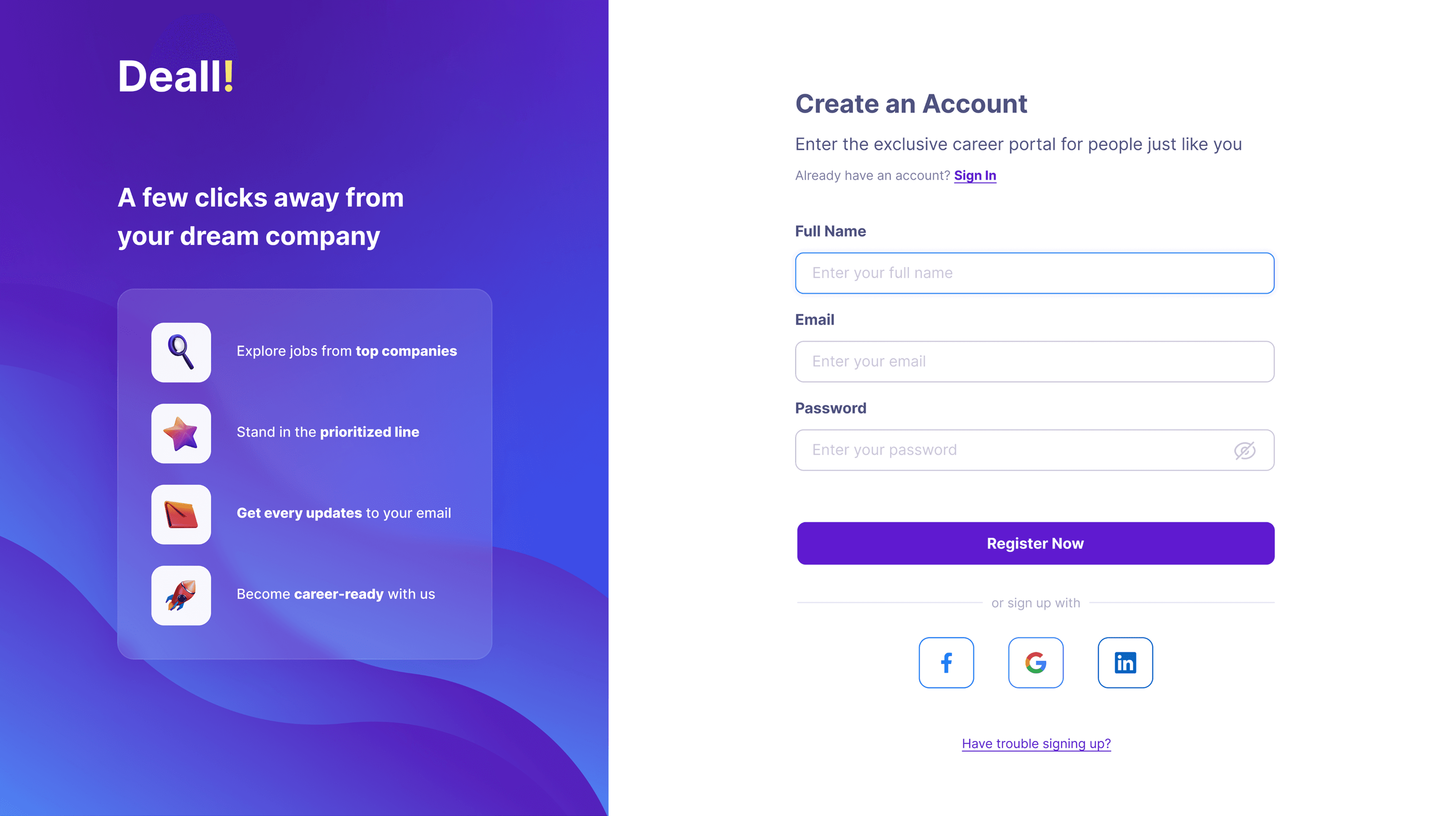
✅ Form-first layout
✨ Clean spacing + grouped fields
🔓 Social sign-in options
📣 Benefit copy refresh
AB Testing & Result
To validate the redesign, I conducted a simple A/B test with 10 users; 5 tested the original sign-up page, and 5 tested the revamped version. Here’s what I observed:
Users on the new version completed the form about 30% faster.
3 out of 5 users completed the original version; all 5 completed the revamped version.
Participants described the new version as “cleaner,” “friendlier,” and “easier to follow.”
Reflection
This project reinforced how small interface changes can drive big impact. By identifying design bottlenecks and applying basic UX principles, I was able to reimagine a smoother user flow with better clarity and structure. If implemented on a larger scale, further usability testing and live churn tracking would help validate the design at scale.
Resource
[1] https://www.hobo-web.co.uk/best-screen-size/
[2] https://www.uxpin.com/studio/blog/best-signup-page-examples/
[3] https://uxdesign.cc/2022-ui-design-trends-guide-22ddc386557b
[4] https://learnui.design/blog/tips-signup-login-ux.html
[5] https://uxplanet.org/12-best-practies-for-sign-up-and-login-page-design-69d6cd045cf
[6] https://uxdesign.cc/design-sign-up-ba0e839e9efb
[7] https://learnui.design/blog/tips-signup-login-ux.html
[8] https://uxplanet.org/12-best-practies-for-sign-up-and-login-page-design-69d6cd045cf
[9] https://asana.com/create-account
[10] https://uxplanet.org/call-for-attention-ui-design-tips-on-cta-buttons-5239413aded2
[other projects]
[UI Gallery]