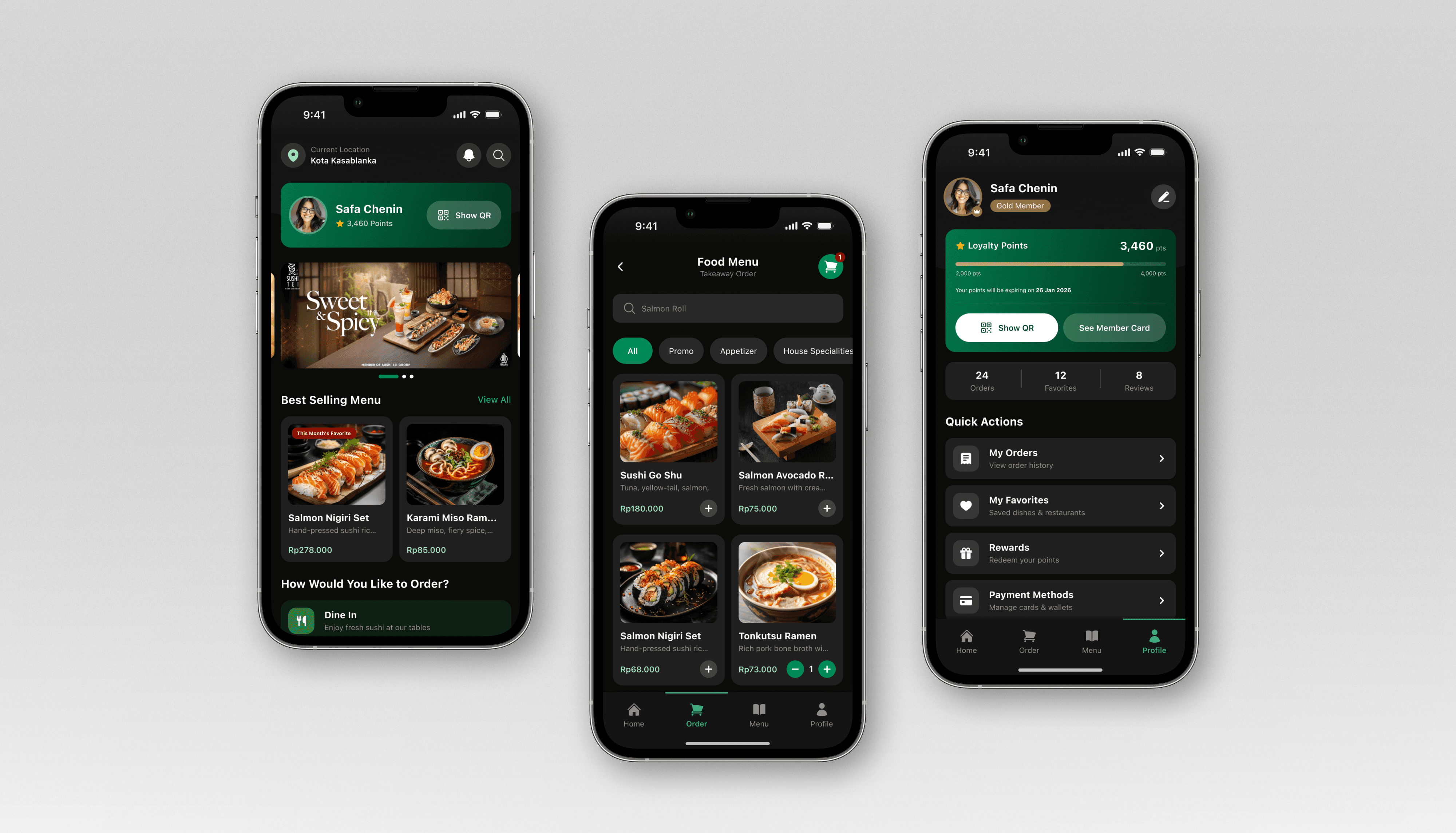
Fixing the Payment Bottleneck: Redesigning Sushi Tei’s QR Flow for Speed
Product Design Personal Project
The QR Code feature that users needed most at checkout was ironically buried inside a tiny profile icon, making first-time (and not-so-new) users clueless, slowing payments, and triggering queue frustration.
[My Role]
User Researcher
Product Designer
[Timeline]
November 2025
THE PROBLEM
users can not easily find the QR code on homepage 👀
Imagine you’re a first-time Sushi Tei member.
You’re at the cashier, the queue is long, and you’re asked to show your QR code. You open the app homepage… and there’s nothing that even hints at “QR”.
Where is it?
Hidden inside the tiny profile icon on the top right corner of the homepage — and even after you get there, the QR button is barely visible….
A simple task becomes trial-and-error. And the queue waits.
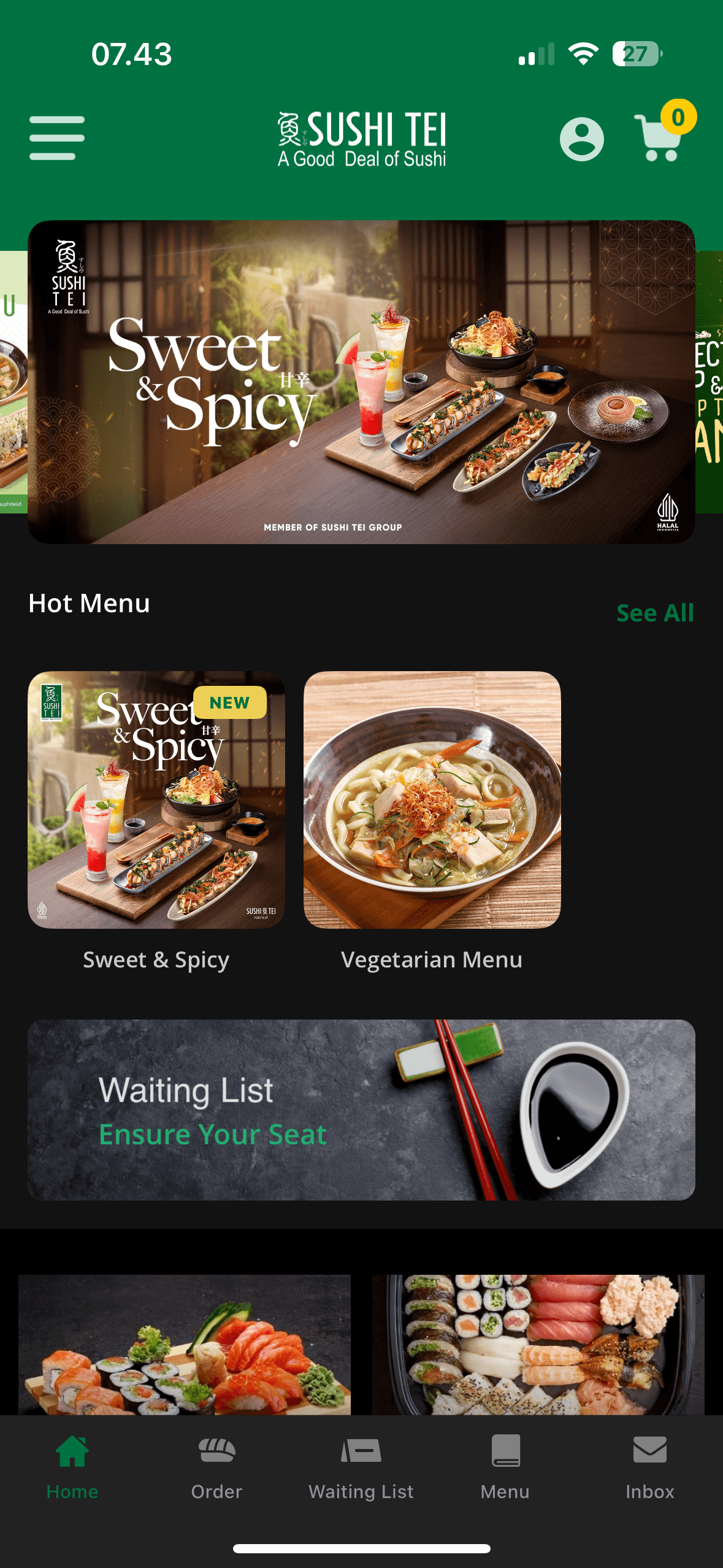
Sushi Tei Homepage Interface
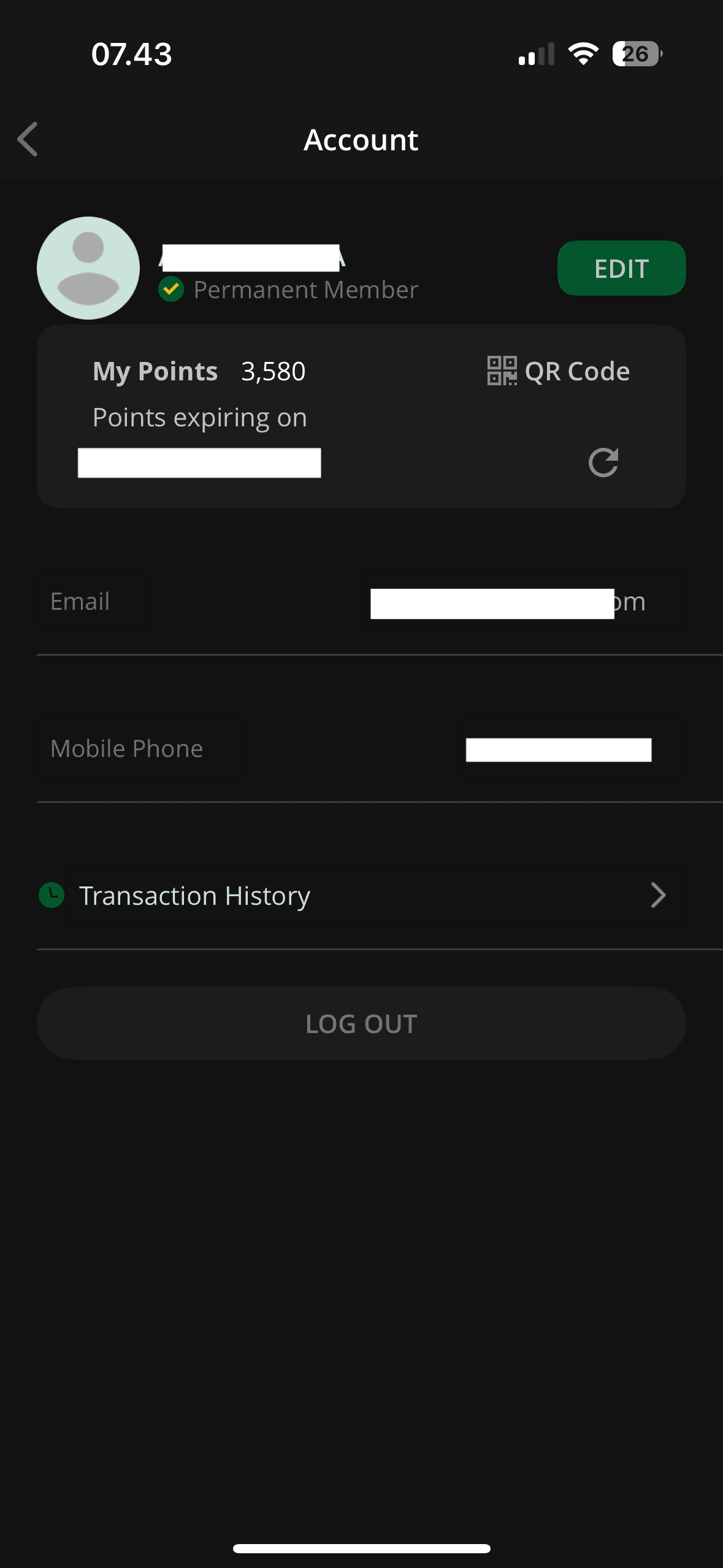
Profile Page
How can i discover the problem?
I did quick user interviews to 8 users (4 new users that install the app for the very first time and 4 others that are using the app for 2-3 times only) + live observation at the cashier, then revealed a pattern:
Some users knew QR existed, but they just couldn’t find it fast enough (need to explore)
Most refused to ask the waiter (pride/social inhibition)
75% of interviewees assumed the QR code should be accessible on the homepage / navigation bar
Why this matters to the busines?
The membership QR code is a critical touchpoint, yet it’s hidden behind a low-visibility profile icon. At checkout, this causes users to hesitate, slow queues, or skip scanning entirely.
What looks like a small UI issue compounds into bigger problems: reduced loyalty engagement, slower operations, and lost customer data. When members can’t reliably access their benefits, the value of the loyalty program erodes, not because users don’t care, but because the system doesn’t support them when it counts.
🧐 So then I challenged one hypothesis:
"If QR Scan becomes instantly visible and accessible, users should finish payment significantly faster."
🎯 GOAL
Based on the hypothesis, i made 3 goals for the app's redesign:
Make the entry point easier to discover
Make the user flow completed by users without assistance
Give positive advantages for both users & business
Success metric: task completion time on QR Code Scan user flow (Prototype & A/B testing)
🎨 CRAFTING INTERFACES
In this step, I leveraged AI tools such as UXPilot to accelerate early ideation and interface exploration, while keeping the design direction anchored on reducing checkout friction and improving QR discoverability.

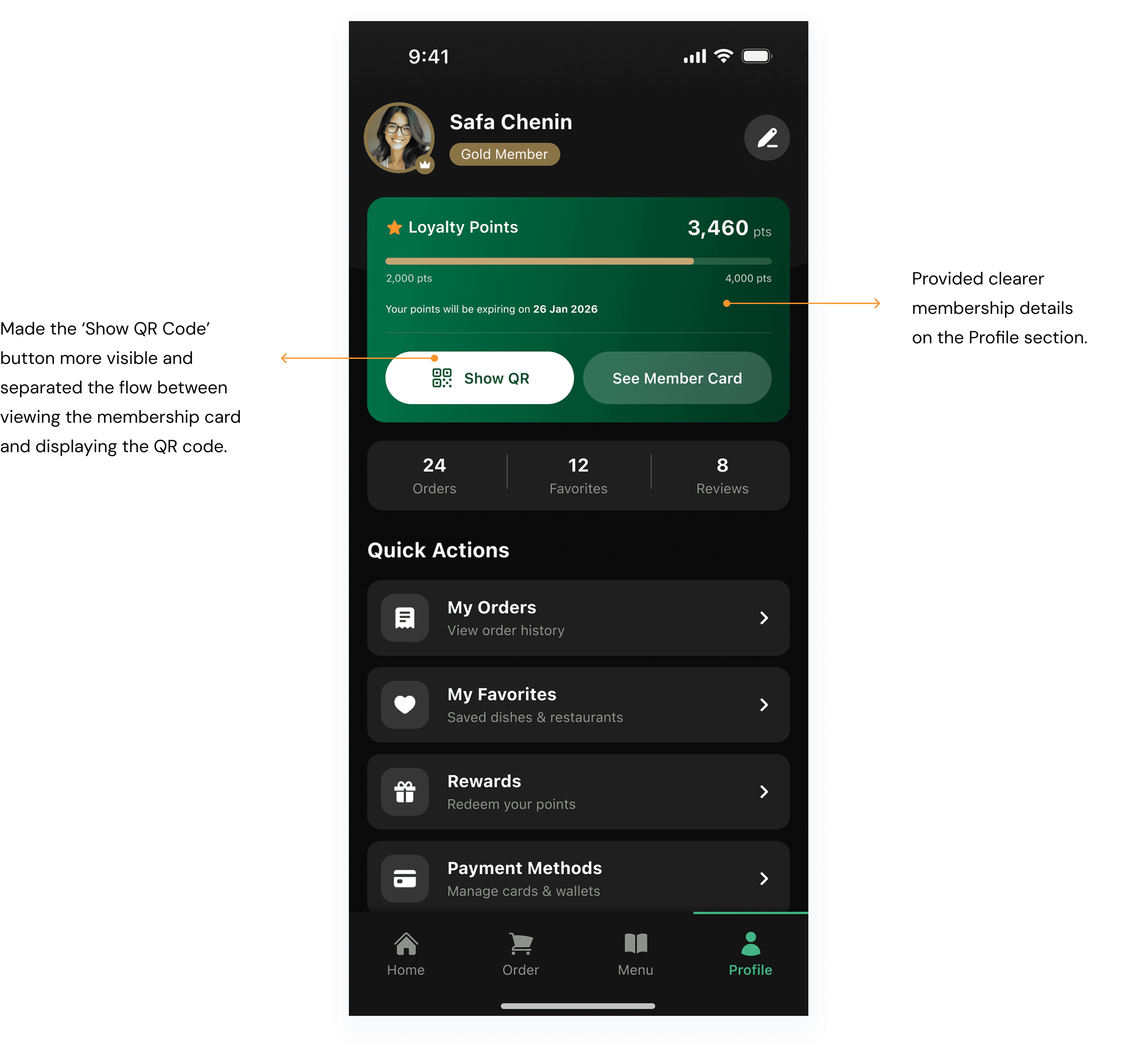
HOMEPAGE
before
after

I surfaced QR access in the homepage’s primary attention zone, allowing users to retrieve their membership instantly without navigation. This reduces hesitation at checkout and supports faster queue flow.
PROFILE PAGE
before
after
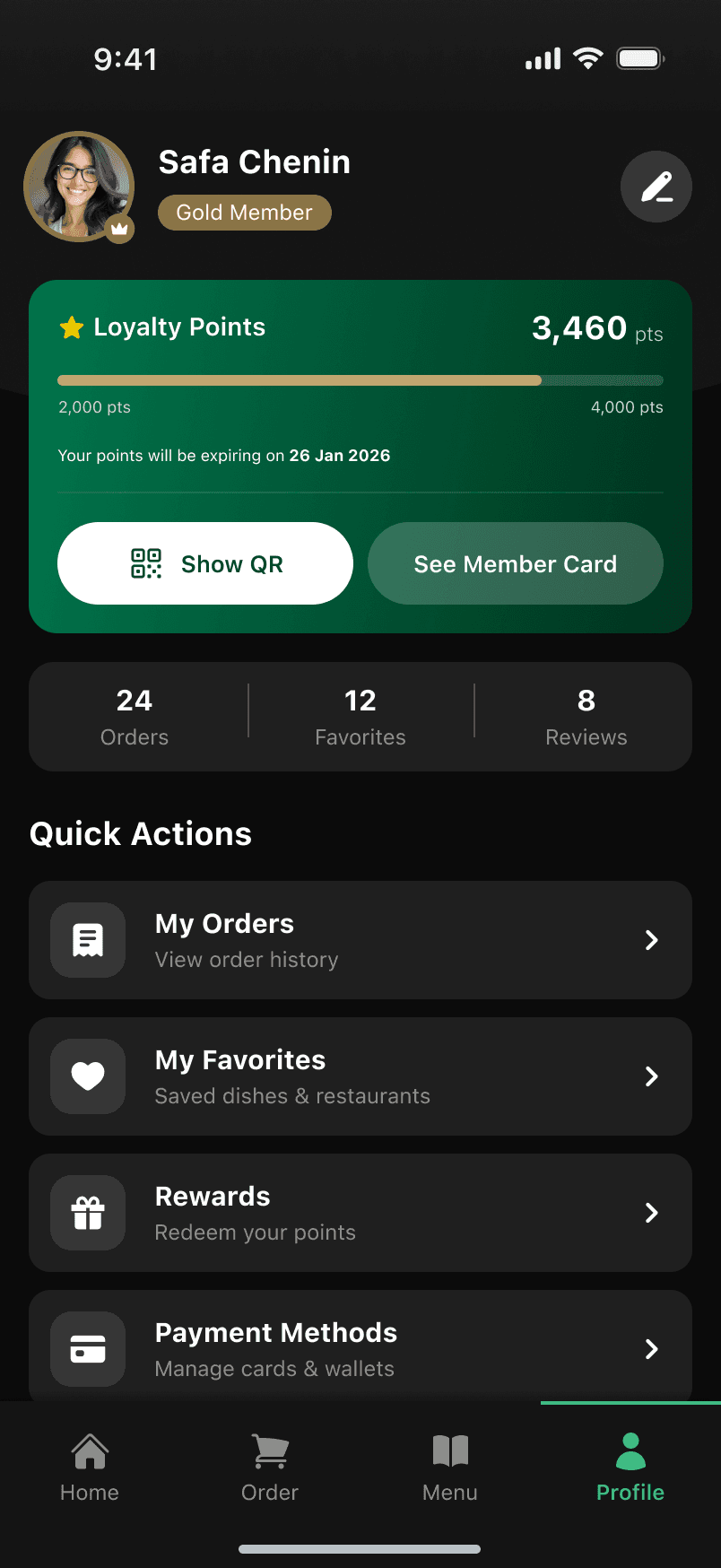
I elevated “Show QR” into a primary CTA within the loyalty card, aligning QR access with points and member status. This removes visual competition from account details and enables faster, more confident scans at checkout.
👥 USER IMPACT
I validated the redesign through a controlled usability test with 5 first-time users who had never used the Sushi Tei app before (first-time users were intentionally chosen to eliminate memory bias and ensure the test reflected true discoverability). Each participant was shown both the existing and redesigned interfaces and asked to complete the same task:
“Open the Sushi Tei app and find the QR Code.”
Task completion time was recorded for each version.
Version
Before
After
Avg. Completion Time
17.4 seconds
4.7 seconds
→ 73% faster task completion without assistance
🎯 GOAL VALIDATION
✅ Goal 1 — Easier entry point to discover: Users consistently located the QR without exploration or guesswork.
✅ Goal 2 — Flow completed without assistance: All participants completed the task independently.
✅ Goal 3 — Positive impact for users & business: Faster completion directly supports smoother checkout experiences.
🏢 BUSINESS IMPACT
Reducing QR discovery time at checkout translates into measurable operational benefits:
Shorter payment queues during peak hours
Reduced pause time at the cashier without additional tooling
Higher customer throughput with the same staff capacity
Together, these improvements support higher transaction throughput and a more efficient operational flow, without requiring changes to infrastructure or staffing.
[other projects]
[UI Gallery]